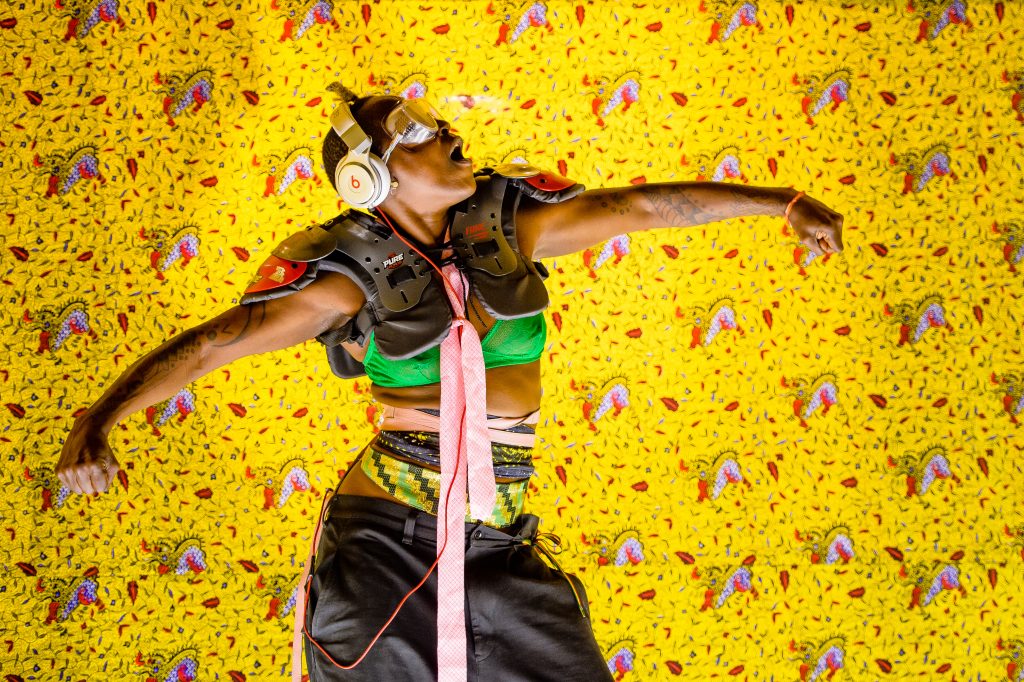
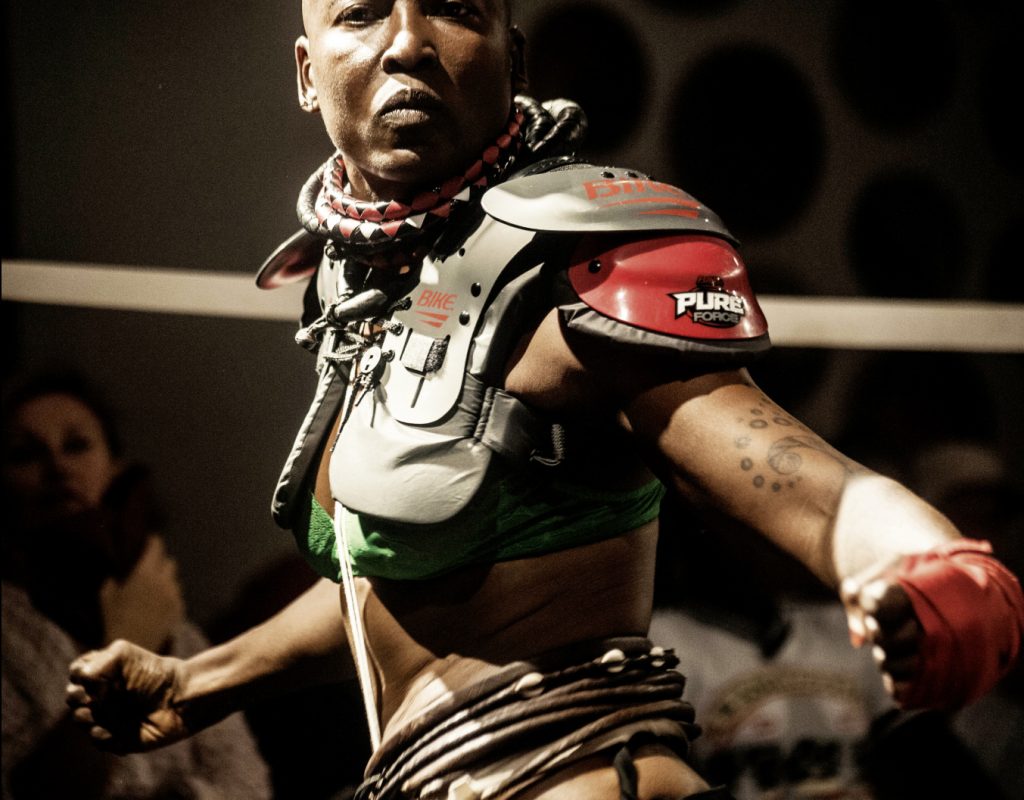
portrait of myself as my fa̶t̶h̶e̶r̶
Past Dates
| Dates | Location |
|---|---|
Aug 15 - Aug 17, 2018 |
Tanz im August, Berlin, Germany |
Aug 02 - Aug 03, 2018 |
Bates Dance Festival, Bates College, Lewiston, ME, USA |
Mar 23 - Mar 25, 2018 |
Walker Art Center, Minneapolis, MN, USA |
Feb 16 - Feb 17, 2018 |
Brussels Dance Festival, Beursschouwburg, Brussels, Belgium |
Jun 10 - Jun 12, 2017 |
Festival Theaterformen, Hannover, Germany |
Feb 08 - Feb 09, 2017 |
Festival de Liège, Liège, Belgium |
Nov 17 - Nov 20, 2016 |
University Musical Society, University of Michigan, Ann Arbor, MI, USA |
Nov 07 - Nov 11, 2016 |
University of North Carolina /Chapel Hill, Durham, NC, USA |
Oct 28 - Oct 29, 2016 |
Dogtown Dance Theater, Virginia Commonwealth University Department of Dance & Choreography, Richmond, VI, USA |
Oct 20 - Oct 22, 2016 |
Dance Center of Columbia College, Chicago, IL, USA |
Oct 14 - Oct 15, 2016 |
Miami Dade College & Miami Light Project, Miami, FL, USA |
Oct 06 - Oct 09, 2016 |
AfroVibes Festival, Amsterdam, Netherlands |
Sep 26 - Oct 01, 2016 |
Théâtre de la Ville, Paris, France |
Sep 23 - Sep 24, 2016 |
Philadelphia Museum of Art, Philadelphia, PA, USA |
Sep 14 - Sep 17, 2016 |
BAM Fisher - Fishman Space, Brooklyn Academy of Music, Brooklyn, NY, USA |
Apr 14 - Apr 17, 2016 |
Peak Performances, Montclair State University, Montclair, NJ, USA |
Mar 29 - Mar 31, 2016 |
Cornerstone Arts Center - Colorado College, Colorado Springs, CO, USA |
Jun 07, 2015 |
Duo/Solo Festival, St. Louis, Senegal |
Mar 07 - Mar 08, 2015 |
Dance Umbrella, Dance Factory, Johannesburg, South Africa |
Jan 28 - Feb 15, 2015 |
MANCC Maggie Allesee National Center for Choreography, Tallahassee, FL, USA |
Dec 05, 2014 |
Little Haiti Cultural Center, Miami, FL, USA |
May 01 - May 31, 2014 |
DAK’ART Dakar Biennial festival, Dakar, Senegal |
Apr 29 - May 04, 2014 |
HIFA Festival, Harare, Zimbabwe |
Feb 21 - Feb 23, 2014 |
92Y Harkness Dance Festival, New York, NY, USA |
Jan 29 - Feb 05, 2014 |
Amherst College, Amherst, MA, USA |
“A no-holds-barred look at masculinity in African culture and the African male body in American culture.”
– The New York Times (listing)
“(A) fascinating, messy, entangling work. The woman that is onstage, embodying the man she would like her father to have been, is fierce enough for you to adore, even as you wonder whether you’d dare to meet her face to face.”
– DanceBeat, ArtsJournal.com
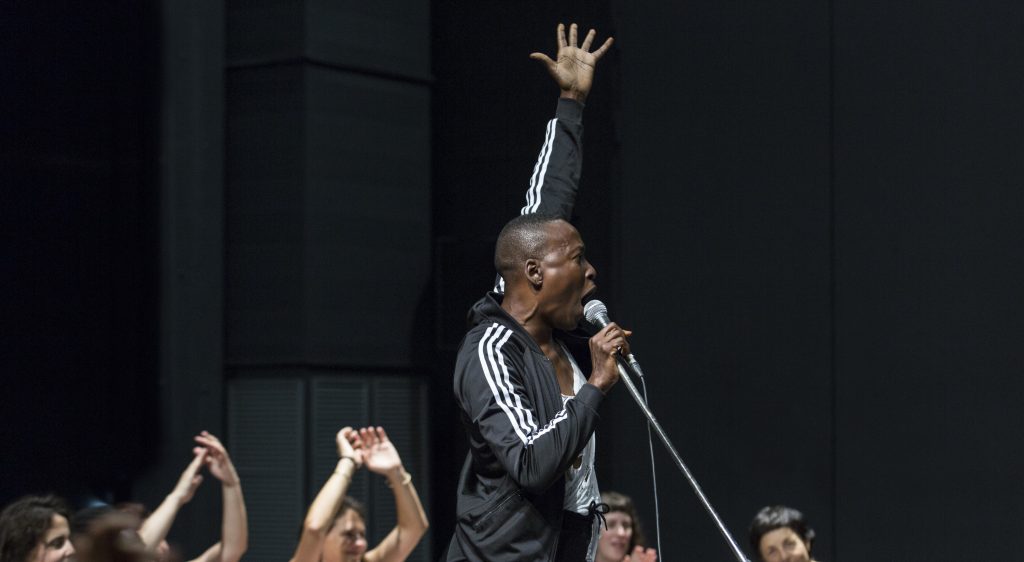
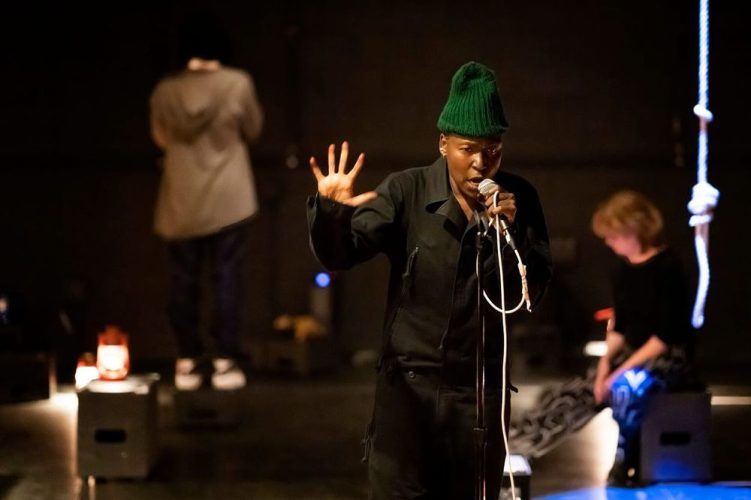
“Ms. Chipaumire, who gives herself the power of the microphone, delivers a booming manifesto—“the African must be freed from the African”—and asks: “How do you become a man? A black man? A black African man?” Offering a 10-step process—“learn to swag,” “make it look natural,” “slow way down”—she critiques stereotypes by magnifying them. (…) Dizzying and Dense…”
– The New York Times (Siobhan Burke)
“[portrait…] is an exercise in engaging the audience in an almost primitive way.”
– The Montclair Times
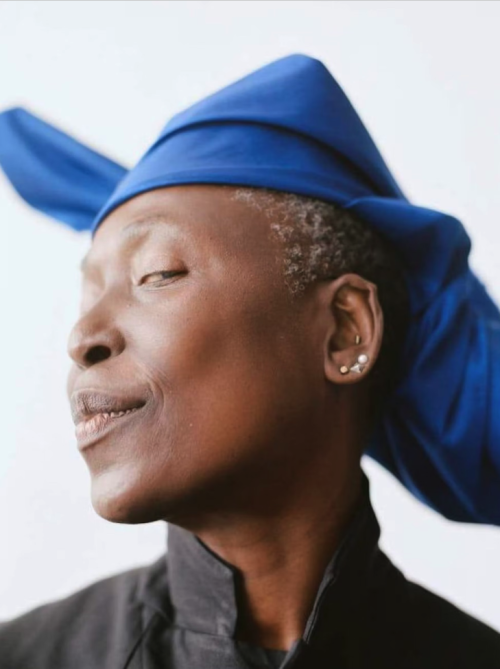
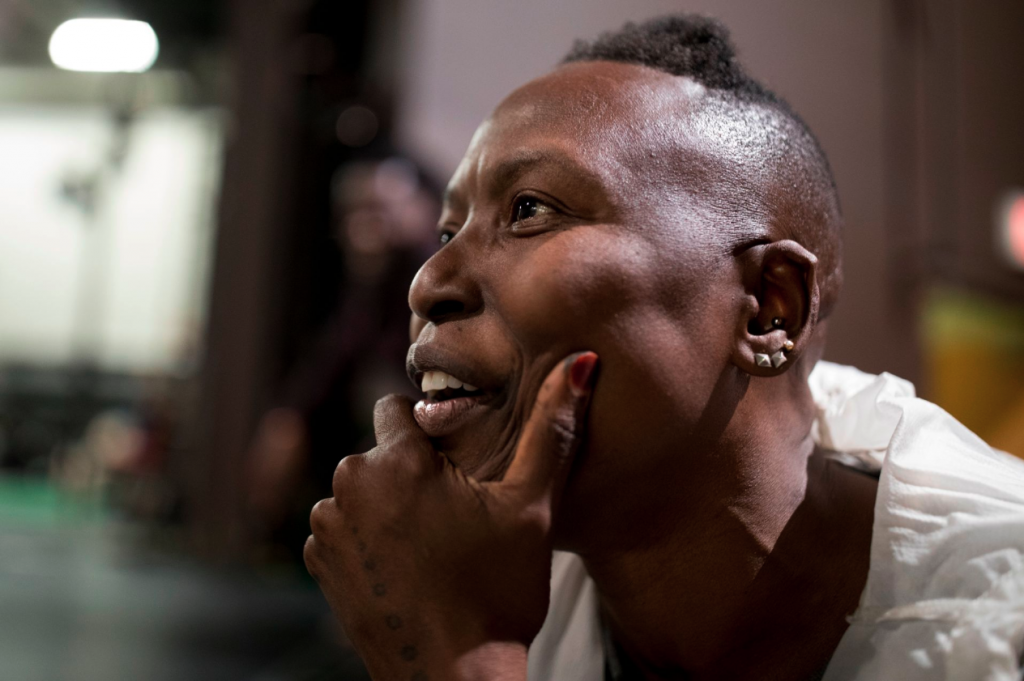
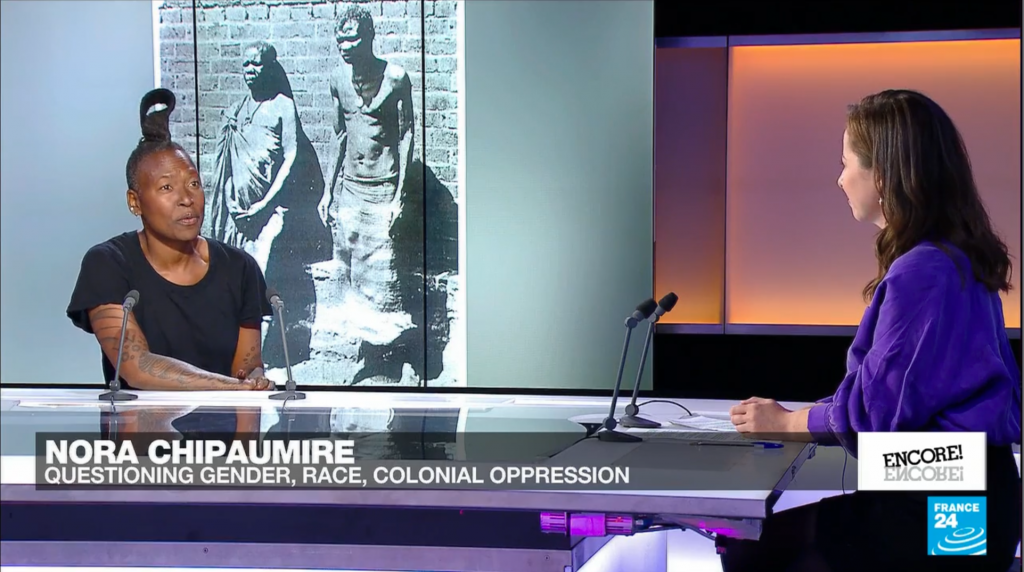
Zimbabwe-born Brooklyn-based dance maker chipaumire continues her investigations on the black body, on Africa, on aesthetics and on art and ideas.
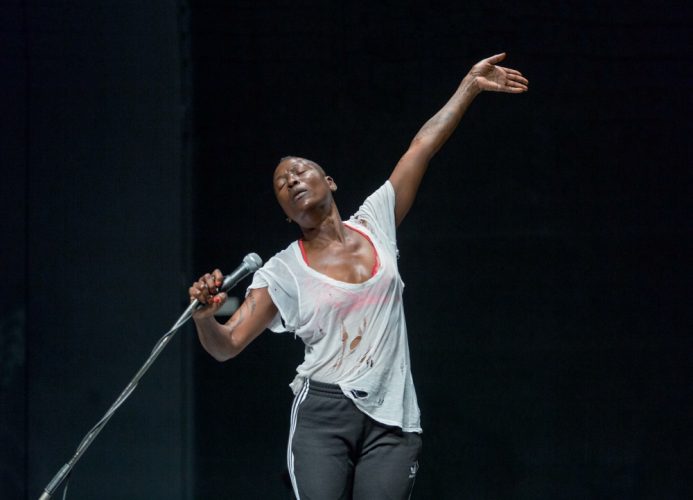
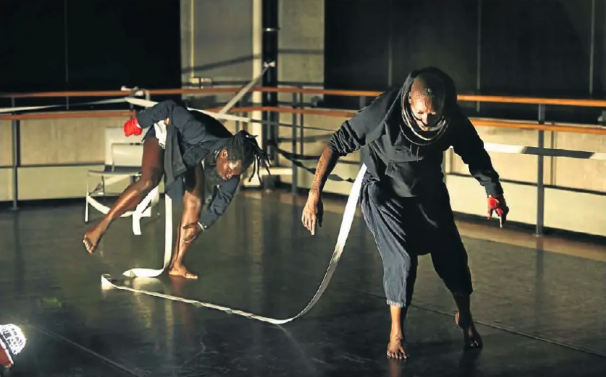
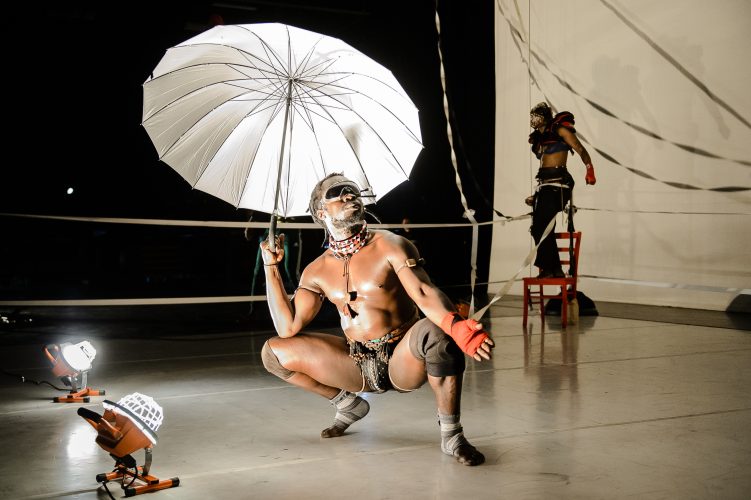
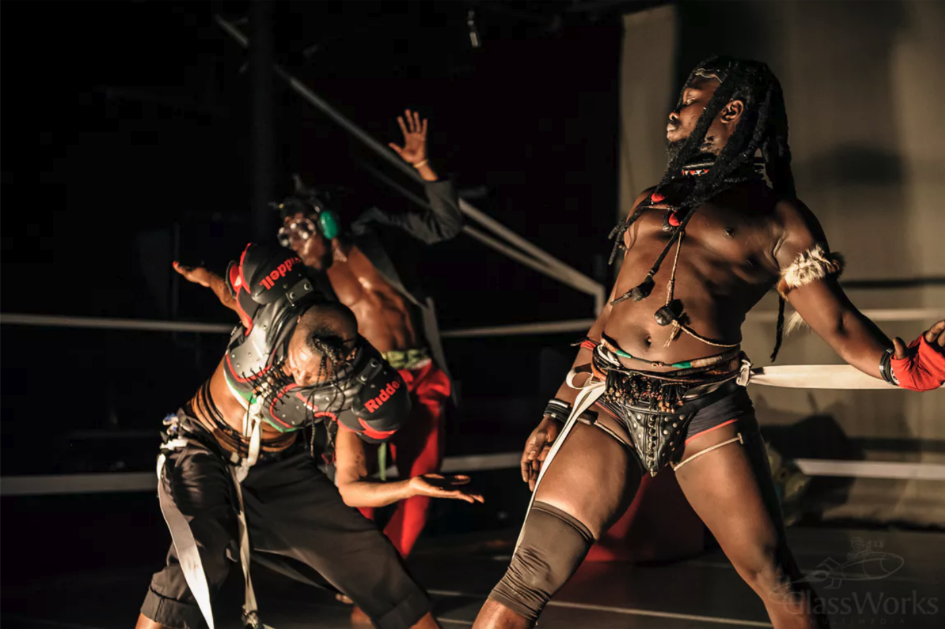
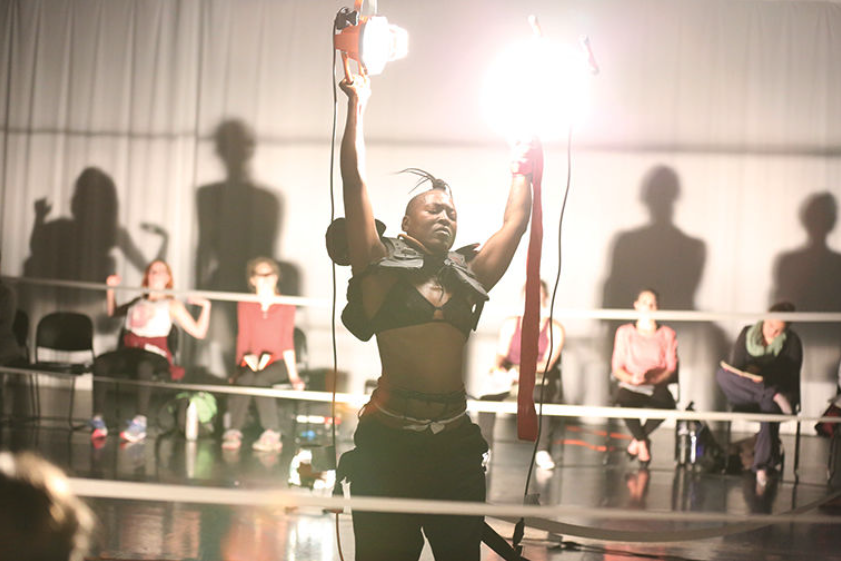
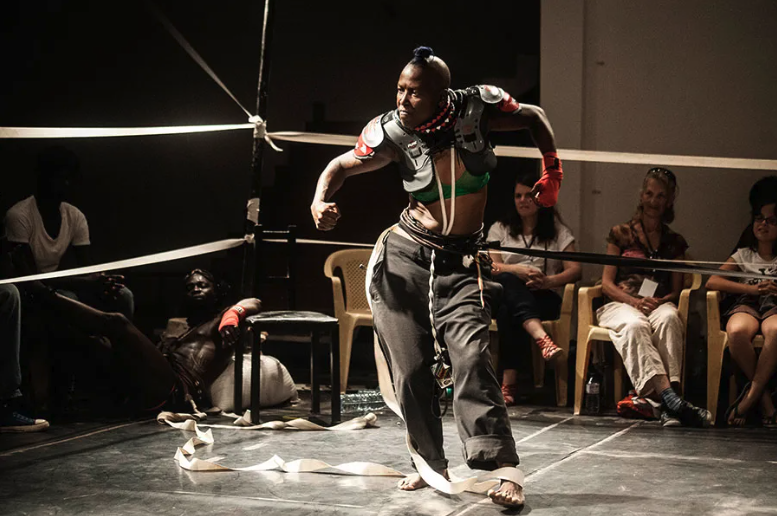
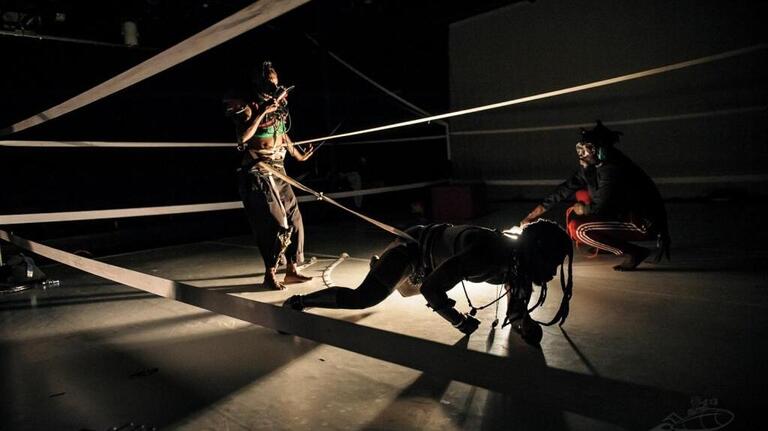
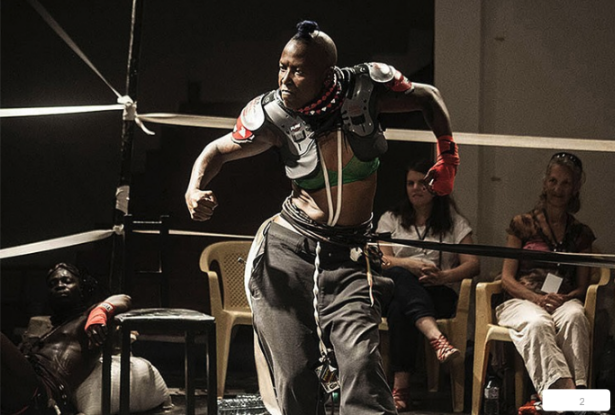
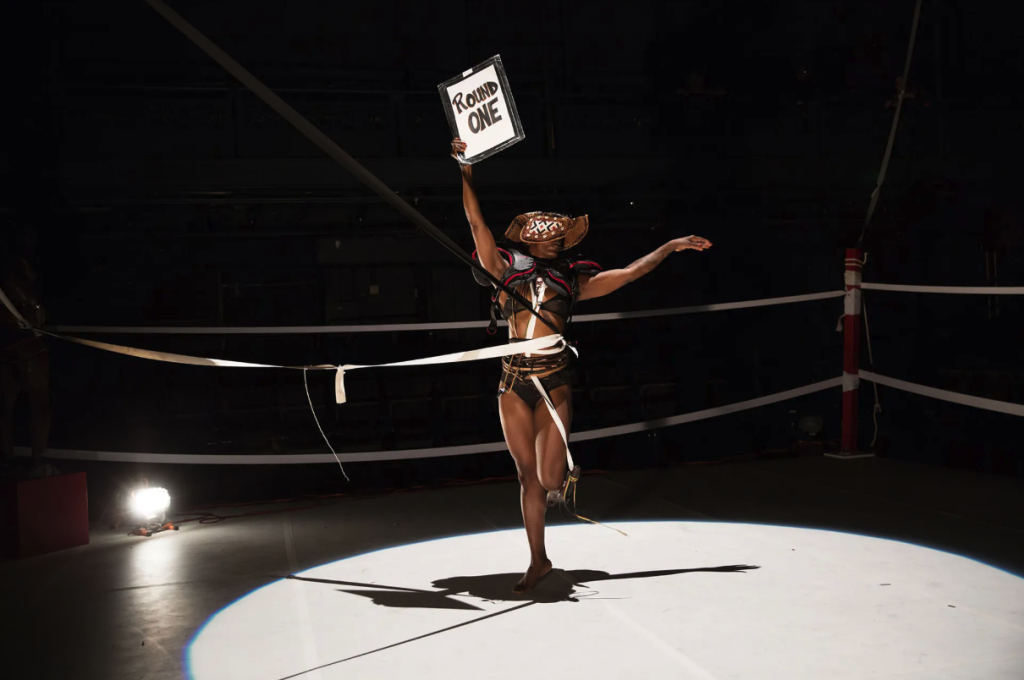
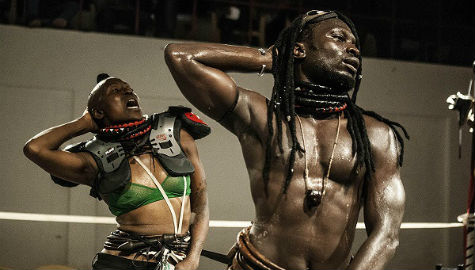
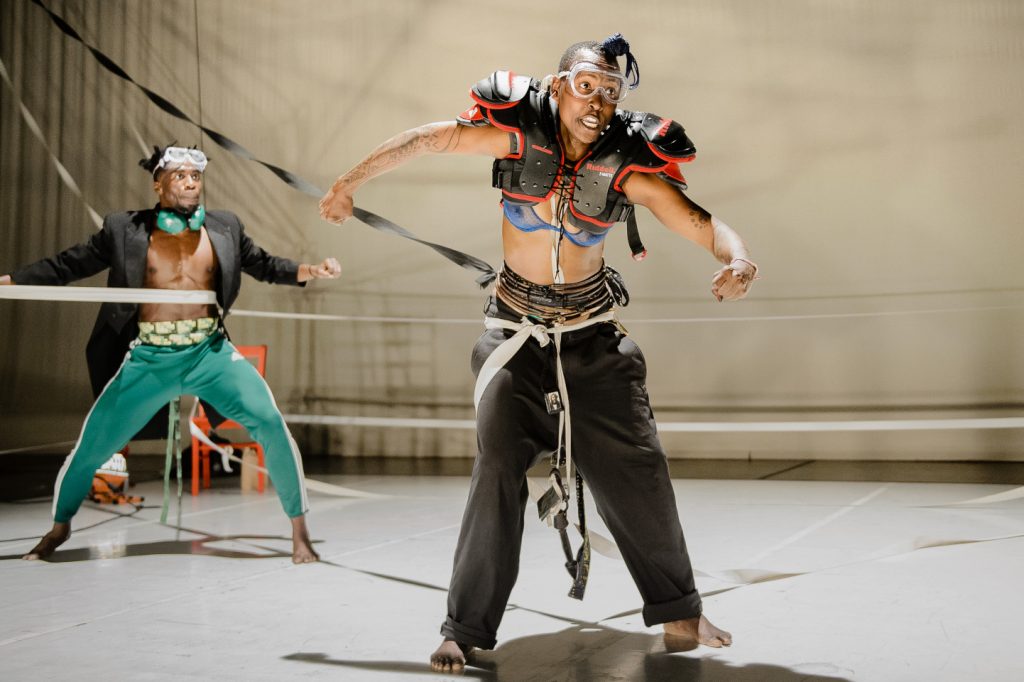
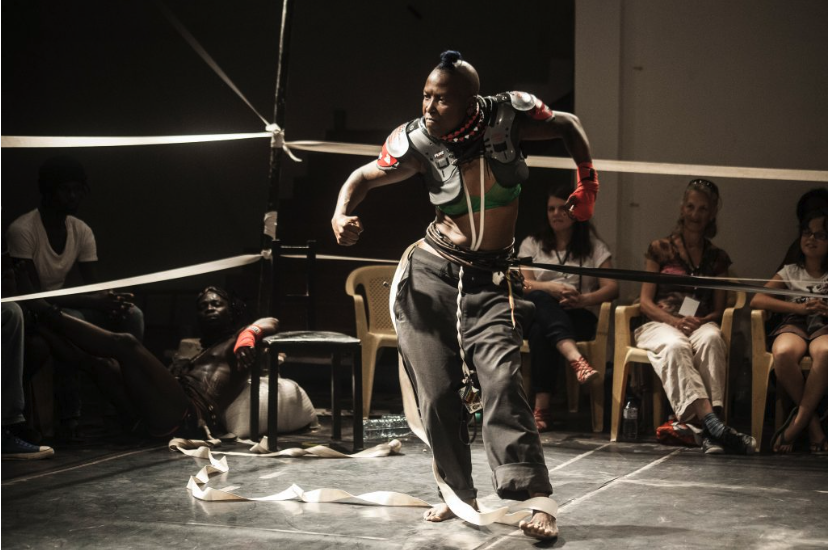
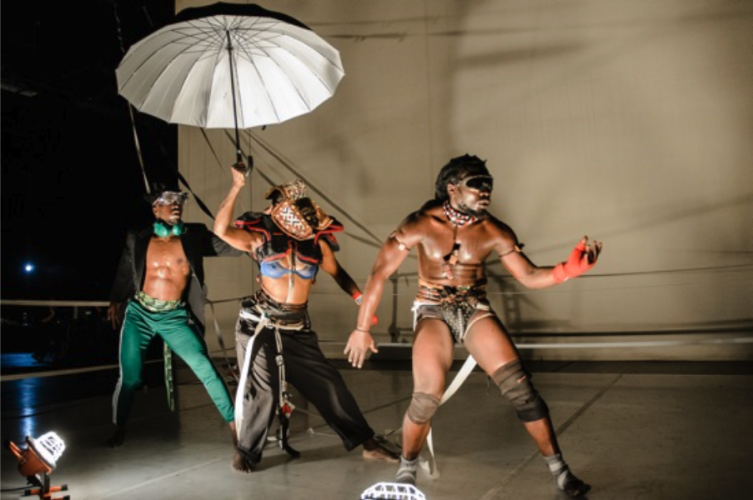
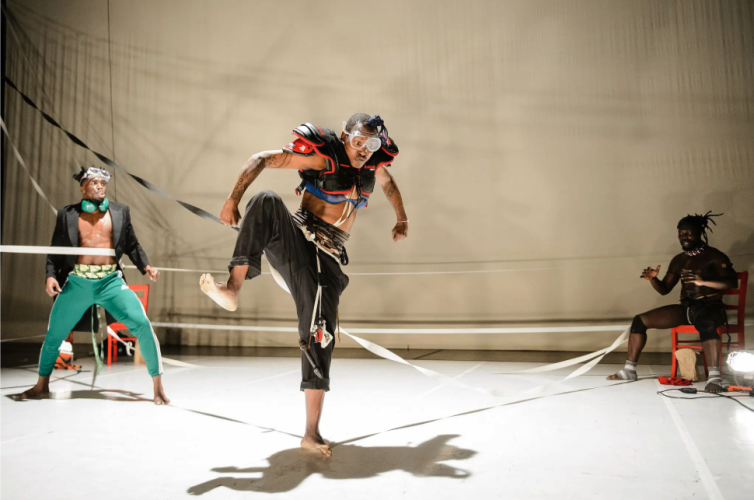
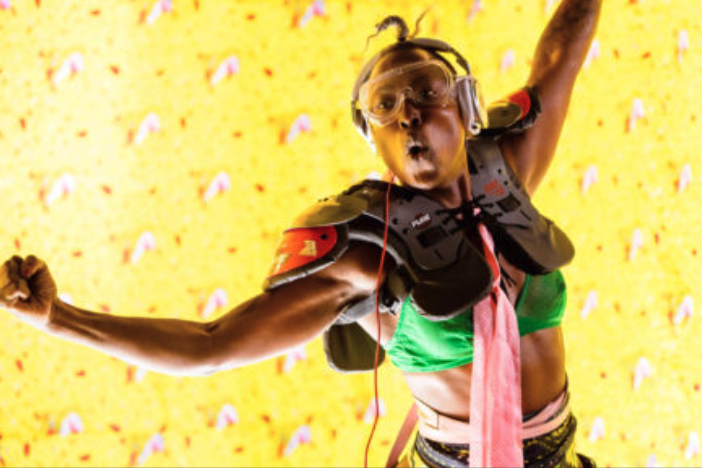
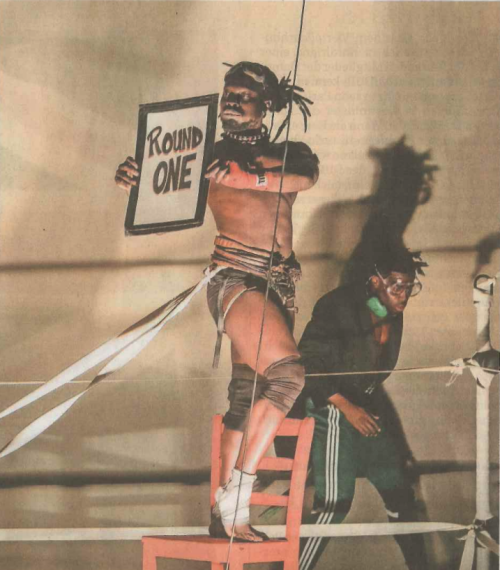
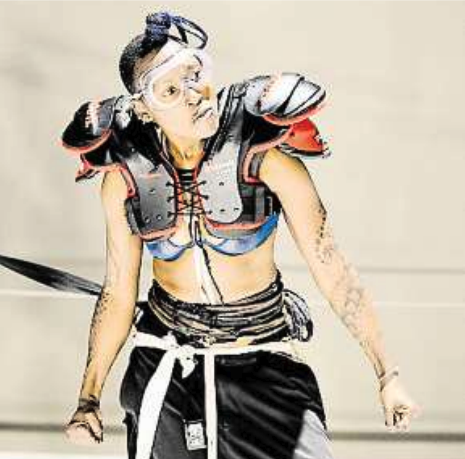
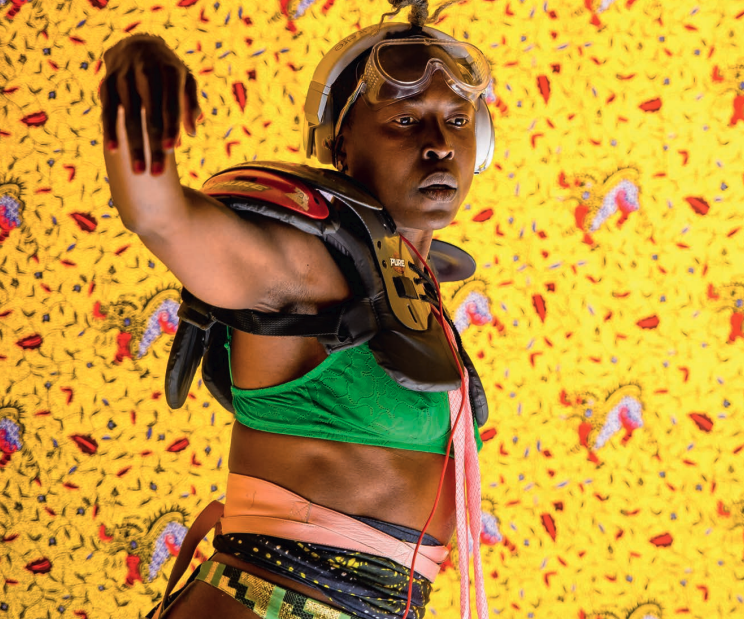
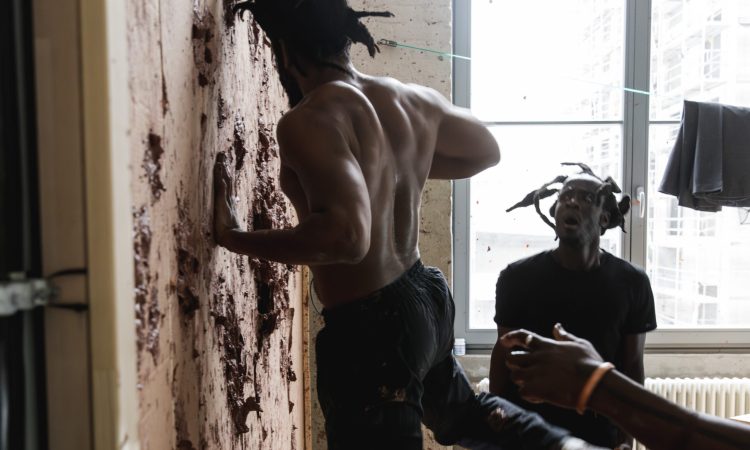
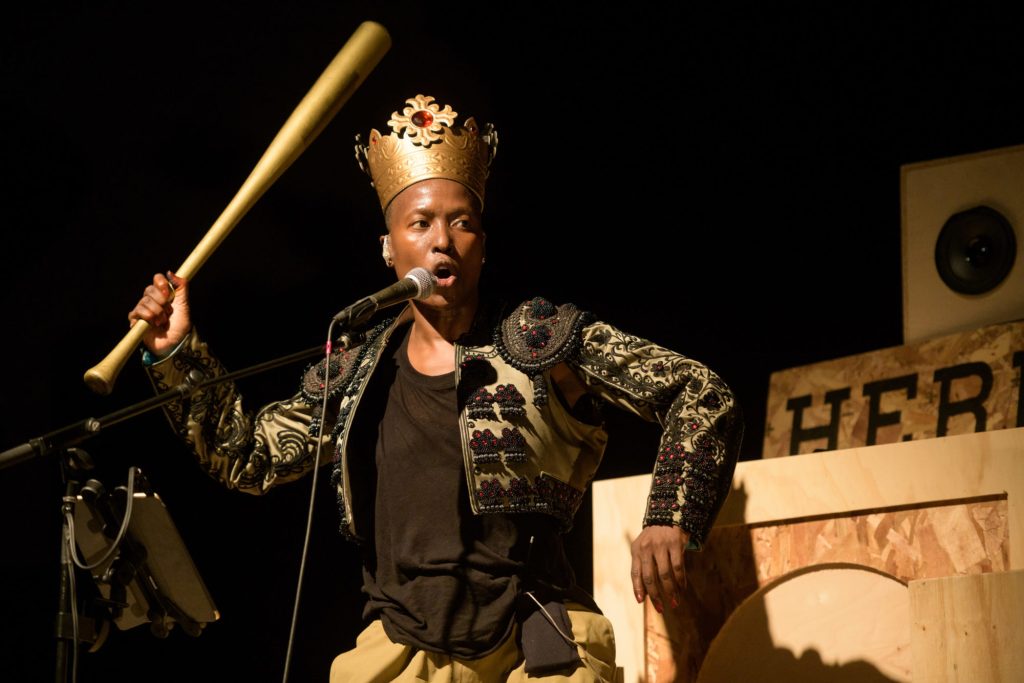
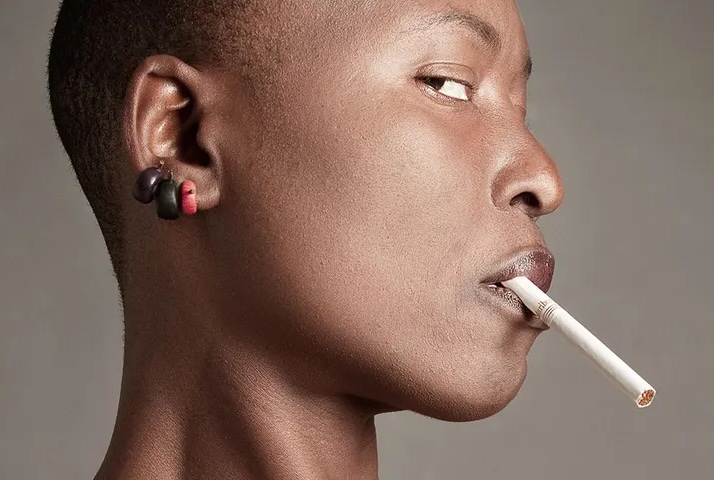
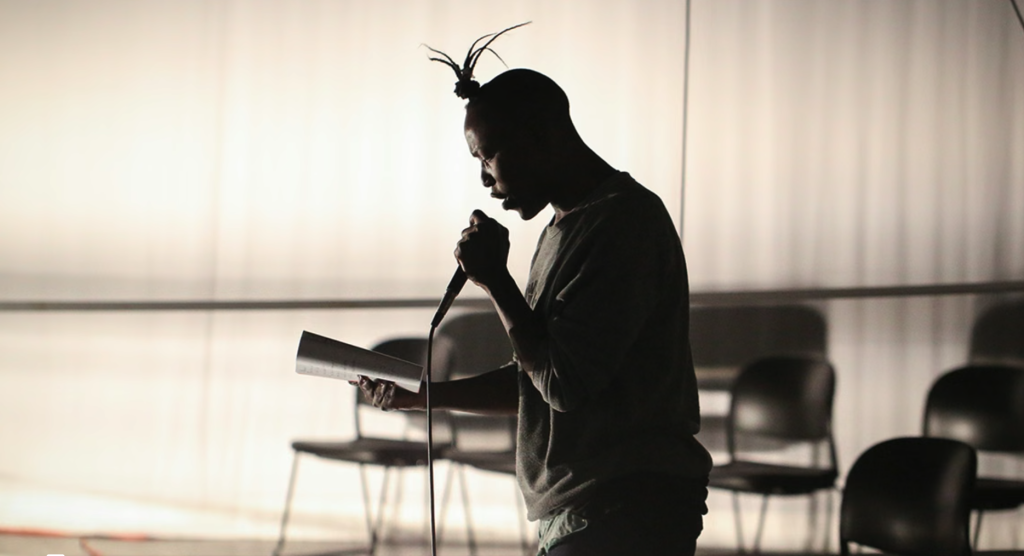
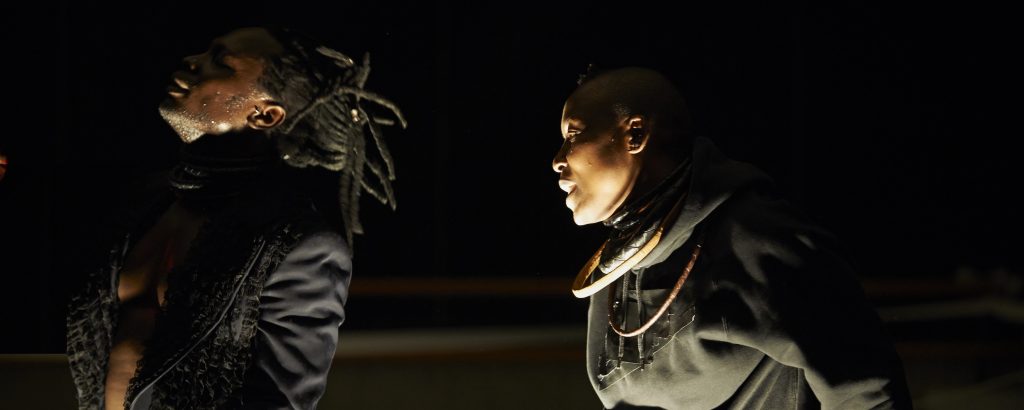
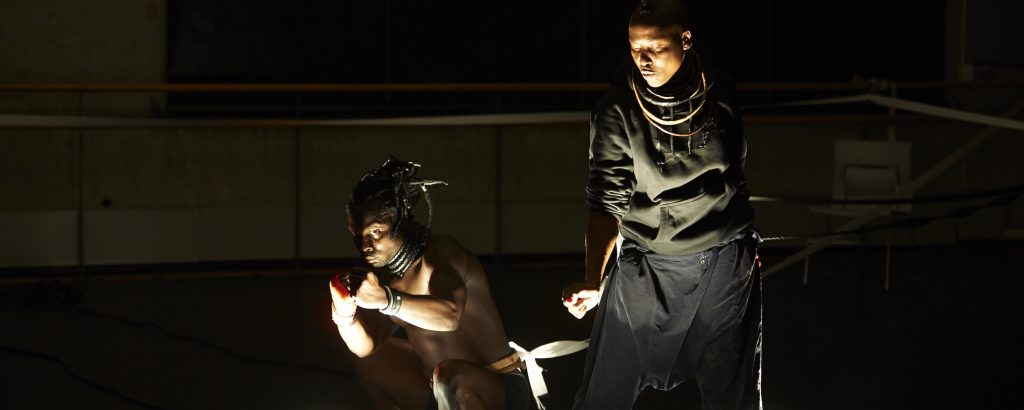
portrait of myself as my father takes place in a simulated boxing ring in which chipaumire and Senegalese dancer Pape Ibrahima Ndiaye, also known as Kaolack (who performed with Compagnie Jant-Bi for many years), are tied together in an exhausting and symbolic dance-ritual. They are joined by Jamaican-born, Brooklyn-based dancer Shamar Watt, who plays the coach/corner man/cheerleader/shadow. In this performance, the spectres of the estranged father dance, struggle, and fight against prejudices, social pressures, the weight of traditions, and history. The piece considers the African male through the lens of capitalism, Christianity, colonialism, and liberation struggles – and how these political and cultural traditions impact the African family and society on a global scale. The imaginary daughter and father are tethered to the stage and to each other: they are both linked and opposed, and the elastic bands are a literal and figurative connection that questions family ties. The show also celebrates and critiques masculinity: its presence, presentation, and representation. This timely examination of black maleness asks: What is it about the black male body that we fear?
Premiere Date
April 14 – 17, 2016
Premiere Venue
Peak Performances, Montclair State University
Running Time
approx. 80 min
Conceived, choreographed, and directed by nora chipaumire
Original Music + Soundscore Philip White
Extra soundscore + text nora chipaumire
Performers nora chipaumire, Pape Ibrahima Ndiaye a.k.a Kaolack, Shamar Wayne Watt
Lighting and Costume Design nora chipaumire
Technical Direction + Stage Management Philip White, Allbin Chavignon
Booking Management Thomas Kriegsmann, ArkType, www.arktype.com
Company Management Leonie Wichmann, Loris Bradley
portrait of myself as my father is commissioned by Peak Performances @ Montclair State University, and is a National Performance Network (NPN) Creation Fund Project co-commissioned by MDC Live Arts in partnership with Miami Light Project, Georgia Institute of Technology, 651 ARTS, Dance Center of Columbia College and nora chipaumire. The Creation Fund is supported by the Doris Duke Charitable Foundation, Ford Foundation,and the National Endowment for the Arts (a federal agency).
The work has received residency support from MANCC, Baryshnikov Arts Center, Miami Light Project, 92Y Harkness DanceCenter, Amherst College, and École des Sables.
Development and production has been funded in part by The Map Fund, supported by the Doris Duke Charitable Foundation and the Andrew W. Mellon Foundation, National Endowment for the Arts, and New York State Council on the Arts. nora chipaumire researched, developed and honed portrait of myself as my father with financial, administrative and residency support from the Dance in Process Program at Gibney Dance. Additional research and development has been supported by The Africa Contemporary Arts Consortium, The Suitcase Fund, The Japan Contemporary Dance Network (JCDN/Kyoto), and Les Subsistances (Lyon, France).
The presentation of portrait of myself as my father was made possible by the New England Foundation for the Arts’ National Dance Project, with lead funding from the Doris Duke Charitable Foundation and The Andrew W. Mellon Foundation, with additional support from the National Endowment for the Arts